
In the fast-paced, ever-evolving landscape of today’s business world, the captivating influence of organizational corporate culture can’t be underestimated. It’s like the invisible hand that guides every aspect of a company, from the way employees collaborate to the customer experience. Much like a symphony conductor, it orchestrates the tone and rhythm of an organization, creating a unique harmony that resonates with every stakeholder.

So, what exactly is this elusive concept we call “organizational corporate culture,” and why is it so crucial? Let’s embark on a journey to unravel the layers of this enigma. Our purpose here is to dive deep into the core of corporate culture, to comprehend not just its definition but its profound significance. It’s about more than just policies and procedures; it’s about the soul of an organization. Find out more about culture in our article on the most important company culture models.
Not into the theoretical part? Then skip right ahead to our practical guide for implementing a healthy company culture in your organization!
Related Topics:
TL;DR: Organizational Corporate Culture Definition
Organizational corporate culture is not merely an abstract concept; it’s the life force that courses through the veins of any company, defining who they are and how they operate. It’s the collective personality, values, beliefs, and behaviors that make up the DNA of an organization. In essence, it’s the shared identity that binds a group of individuals working toward a common purpose. It’s the difference between a business that’s merely transactional and one that’s transformational.
Understanding organizational corporate culture isn’t just a matter of academic interest; it’s about realizing why it’s the heartbeat of any business. It matters because it directly impacts employees’ job satisfaction, their productivity, and the company’s success. The right corporate culture can foster innovation, boost morale, and create a workplace where people thrive. Conversely, a toxic culture can lead to employee burnout, high turnover, and ultimately, the decline of an organization. As readers, grasping the concept of corporate culture empowers us to be more aware and influential in the workplaces we inhabit, be it as employees or leaders.
Need help to take your culture to the next level? We specialize in team development solutions to strengthen the corporate culture within your team. Check out our Workshop portfolio here.
Types of Corporate Cultures
Of course, every culture is unique and highly influenced by the individuals in your team. However, let’s look at some types that we can use to distinguish organizational cultures.
Innovative Culture: Characteristics and Benefits
Innovative corporate culture is the lifeblood of forward-thinking companies. Here, we explore the key characteristics and the numerous benefits it brings:
Collaborative Culture: How It Promotes Teamwork and Creativity
Collaborative corporate culture places a premium on teamwork and cooperation, emphasizing the strength of collective effort:
Traditional Culture: Examining the Pros and Cons
Traditional corporate cultures, while deeply rooted in history, have both advantages and limitations:
Pros:
- Stability: Traditional cultures are often marked by a strong sense of stability and predictability, providing employees with a structured work environment.
- Hierarchy: A clear hierarchy can be advantageous for decision-making and accountability.
- Long-Term Orientation: Companies with traditional cultures may have a long-term vision and commitment to their core values and mission.
Cons:
- Resistance to Change: Traditional cultures can sometimes be resistant to change, making it challenging to adapt to evolving market dynamics.
- Innovation Hurdles: A strict hierarchy and resistance to new ideas may hinder innovation and creativity.
- Employee Morale: Inflexible cultures can lead to reduced employee morale, as employees may feel their voices are unheard or their potential untapped.

Organizational Corporate Culture Types: Examples
We don’t necessarily want to categorize company cultures in “good” and “bad”. Whatever works for you is great. However, these days top talent is made up of young, creative, and modern people that desire a culture to match. These two examples vividly showcase the profound influence of corporate culture, emphasizing the difference between a thriving, innovative atmosphere and one marked by stagnation and disengagement. These real-world scenarios serve as compelling evidence of why delving into the intricacies of organizational corporate culture is paramount.
1. The Thriving Tech Startup: Google
Picture, if you will, the dynamic environment of Google, one of the most iconic tech startups of our time. Google’s corporate culture is a fertile breeding ground for innovation and employee satisfaction. In the heart of Silicon Valley, Google’s headquarters, known as the Googleplex, resembles a playground for adults. Here, engineers work on whimsical projects like self-driving cars and deliver their expertise while playing a game of ping-pong or enjoying free gourmet meals. The company’s core values, such as “Don’t be evil” and “Focus on the user and all else will follow,” emphasize creativity, freedom, and the well-being of employees. This culture has not only yielded groundbreaking products like Google Search and Gmail but has also led to Google consistently ranking among the best places to work, a testament to the transformative power of a vibrant corporate culture.
2. The Bureaucratic Corporation: A Tale of General Motors
In stark contrast, consider the tale of General Motors in the mid-20th century. This colossal corporation, often characterized by rigid hierarchy, conformity, and top-down decision-making, faced a cultural crisis. The bureaucratic culture inhibited innovation, stifled employee creativity, and ultimately contributed to a decline in the company’s fortunes. General Motors lost touch with the changing times and customer demands. It was not until much later, after facing bankruptcy in 2009, that the company recognized the need for a cultural shift. A new leader

ship team, focused on openness, collaboration, and a more inclusive culture, embarked on the path of revitalization. This case highlights the undeniable impact of corporate culture on an organization’s trajectory, underscoring that culture can make or break a company’s success.
Organizational Corporate Culture: Models
Models are a great way to better understand different approaches to corporate cultures. They offer various perspectives on organizational culture and can be helpful in the analysis, design, and transformation of cultures within organizations. Therefore, we briefly introduce the three most important models and their benefits. It’s important to note that none of the following models fully cover all aspects of corporate culture, and it can be meaningful to combine multiple approaches to get a more comprehensive picture.
1. Schein’s Three Levels of Culture Model
Schein’s Three Levels of Culture Model provides a profound analysis of organizational culture by dividing it into three interconnected levels: Artifacts, Espoused Values, and Basic Assumptions. Each of these levels contributes in different ways to shaping the organizational culture.
2. Hofstede’s Cultural Dimensions
Hofstede’s Cultural Dimensions offer a significant framework for examining cultural differences and their impact on organizations and societies. Developed by Geert Hofstede, these dimensions highlight the distinct values and attitudes prevailing in different cultures. Each dimension contributes to the formation of cultural identity and influences the behavior of individuals and groups within organizations.
3. Denison’s Organizational Culture Model
provides a useful framework for analyzing and improving organizational culture. This model is divided into four main dimensions: Mission, Consistency, Involvement, and Adaptability.
Corporate Culture: Important Aspects
In order to influence, change and shape your organizational corporate culture, you first need to understand the incredibly important aspects influencing your existing and future. Even though there are certain things you as a leader cannot influence regarding culture, others may be directly tied to your actions. Let’s find out more.
Values and Beliefs: How the core values shape the culture
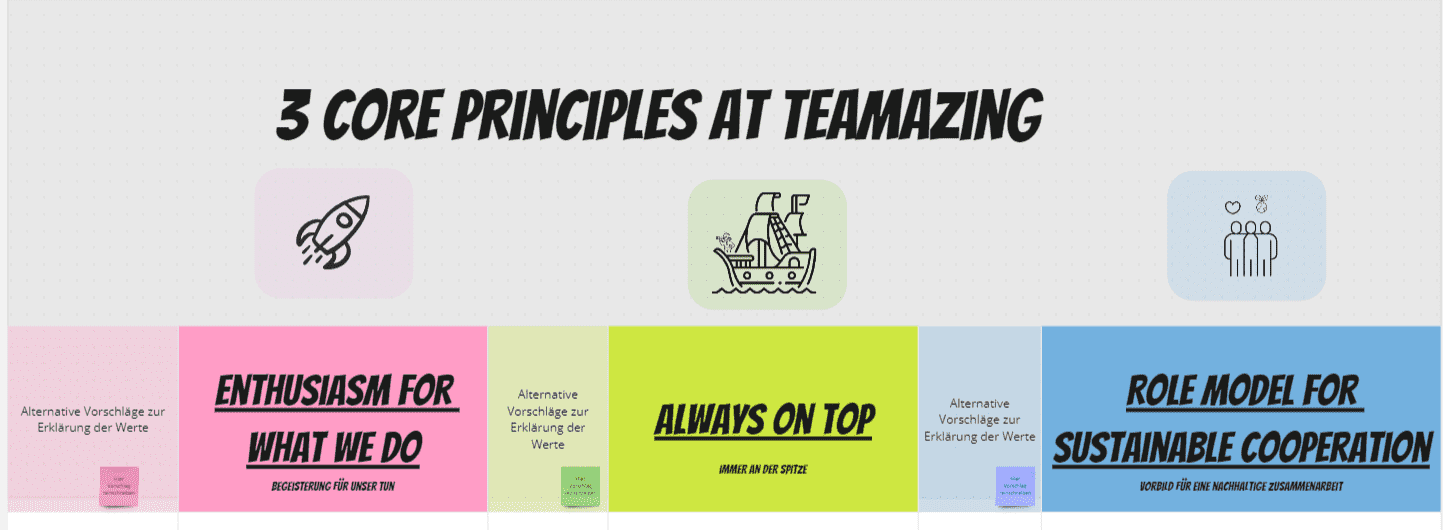
At the heart of any corporate culture lie its values and beliefs, serving as the guiding stars that illuminate the path forward. These core values are not just words on a wall; they are the foundation upon which decisions, behaviors, and interactions are built. Whether it’s integrity, innovation, or customer-centricity, these values define what a company stands for, influencing how employees approach their work and how the organization engages with its stakeholders. In essence, they set the ethical and moral compass of the culture, dictating the company’s character and long-term goals.
We dedicated a lot of time and careful planning into the formulation of our company values, and it has definitely changed our culture for the better. If you want to learn how company values can be implemented successfully, check out our article on corporate value.
Behavior and Norms: The unwritten rules that govern a corporate culture
But values alone aren’t enough. Corporate culture also encompasses the unspoken rules and norms that govern how things are done within the organization. These unwritten rules can be as influential as official policies. They shape the everyday behaviors and interactions, defining what’s acceptable and what’s not. Think of it as the hidden code of conduct that employees intuitively follow. Are employees encouraged to take risks and voice their opinions, or is there an unspoken expectation of conformity? These norms create the environment in which individuals work and communicate, and they are a powerful undercurrent in any culture.
Example
From first-hand experience, we can safely say that rituals are best implemented by the employees themselves. In our physical offices, for example, it has become custom that everyone eats their lunch together. Not only does this serve as a nice midday break, but also brings the team together casually, chatting and enjoying each other’s company.
Whenever arrive at the office, we also make sure to greet every colleague and have a quick chat with them, even if it’s just a short rant about the morning traffic. Small, little unwritten rules like these can really elevate your team spirit.
Symbols and Rituals: The visible and hidden elements that express culture
Culture is not only about what’s said, but what’s shown and done. Symbols and rituals are the visible and hidden manifestations of corporate culture. They can be as tangible as the layout of the office, the dress code, or the way meetings are conducted. They can also be more subtle, like the stories employees share, or the way achievements are celebrated. These symbols and rituals are the language of culture, conveying the values and norms in a way that resonates with individuals. For example, a casual dress code and an open-door policy can signify a culture that values informality and approachability, while a strictly hierarchical office layout and formal dress code might indicate a more traditional and structured culture.
Example
When it comes to emphasizing the significance of symbols and rituals, Zappos, the online shoe and clothing retailer, is a prime exemplar. Zappos has gained renown not just for selling shoes but for its unique corporate culture, which is celebrated through distinct symbols and rituals.
Visible Symbols:
- Customer Service Reps’ Desk Setup: At Zappos, a visible symbol of their culture is the customer service representatives’ desks. These desks are uniquely personalized, featuring decorations, toys, and even quirky signs that reflect the employee’s personality and interests. This symbolizes the company’s belief in fostering individuality and creativity.
- Culture Book: Zappos annually publishes a “Culture Book” that contains unedited employee submissions sharing their thoughts on the company’s culture. This book is distributed to customers and partners, offering an authentic and transparent look into the culture and values of the company.
Hidden Rituals:
- The Offer: A noteworthy hidden ritual at Zappos is their legendary job offer process. When a candidate is extended a job offer, they are given the option of receiving an additional bonus to leave the company immediately, thus ensuring that only those truly aligned with the culture and values stay on. This ritual reinforces the importance of cultural fit within the organization.
- Core Values Interviews: Zappos conducts interviews centered around their ten core values, and whether a candidate is a fit is determined as much by how well they align with these values as by their qualifications. This hidden ritual ensures that new hires not only bring the right skills but also embrace the company’s cultural norms.
Interesting fact:
Several studies, like the one from the BMC, have examined, that leadership significantly correlates with a positive organizational corporate culture and job satisfaction. Itching to step up your leadership game? Then check out our Leadership Workshop!
The Impact of Organizational Culture
Feels like a lot of fuss for something that is not guaranteed to work? We show you the tremendous impact company culture can have on you, your employees and ultimately your business.
On Employees: How culture affects morale, motivation, and productivity
The impact of organizational corporate culture on employees is nothing short of transformative. Here, we’ll explore how culture influences morale, motivation, and productivity, shedding light on why it matters to the individuals within an organization:
- Morale Boost: A positive culture fosters a sense of belonging, appreciation, and engagement. When employees feel valued and respected, their morale soars. They look forward to coming to work, and this positivity becomes infectious.
- Motivation at Its Peak: Culture plays a pivotal role in motivating employees. A culture that aligns with their personal values and provides opportunities for growth ignites their passion and drive. They’re not just working; they’re striving for excellence.
- Enhanced Productivity: An engaging and empowering culture inspires employees to go the extra mile. They’re more creative, more dedicated, and more productive. When they’re part of something bigger than themselves, they bring their best to the table.
On Performance: The link between culture and a company’s success or failure
Corporate culture isn’t just a feel-good concept; it’s tightly linked to a company’s overall performance. It’s the compass that guides an organization toward success or failure:
- Innovation and Adaptability: A culture that encourages innovation and adaptability thrives in a rapidly changing business landscape. Such companies are better equipped to innovate, stay competitive, and evolve with the times.
- Customer Satisfaction: A culture that values customers and prioritizes their needs leads to higher customer satisfaction. When employees are aligned with customer-centric values, it naturally reflects in their interactions and service quality.
- Employee Retention: A positive culture reduces turnover rates. When employees are content, motivated, and aligned with the culture, they’re more likely to stay with the company. This reduces the costs and disruptions associated with high turnover.
Case Study: A notable example of a company’s culture transformation and its consequences
To illustrate the tangible consequences of a culture transformation, we’ll explore a compelling case study: IBM. Once known for its rigid and hierarchical corporate culture, IBM embarked on a remarkable journey of cultural transformation. By shifting toward a more flexible, collaborative, and innovative culture, the company rebranded itself as an agile tech giant. This transformation not only led to a resurgence in its market position but also demonstrated the remarkable ability of corporate culture to rejuvenate a company’s prospects. The IBM case study serves as a compelling example of how cultural change can make or break a company, reinforcing the importance of understanding and shaping organizational corporate culture.
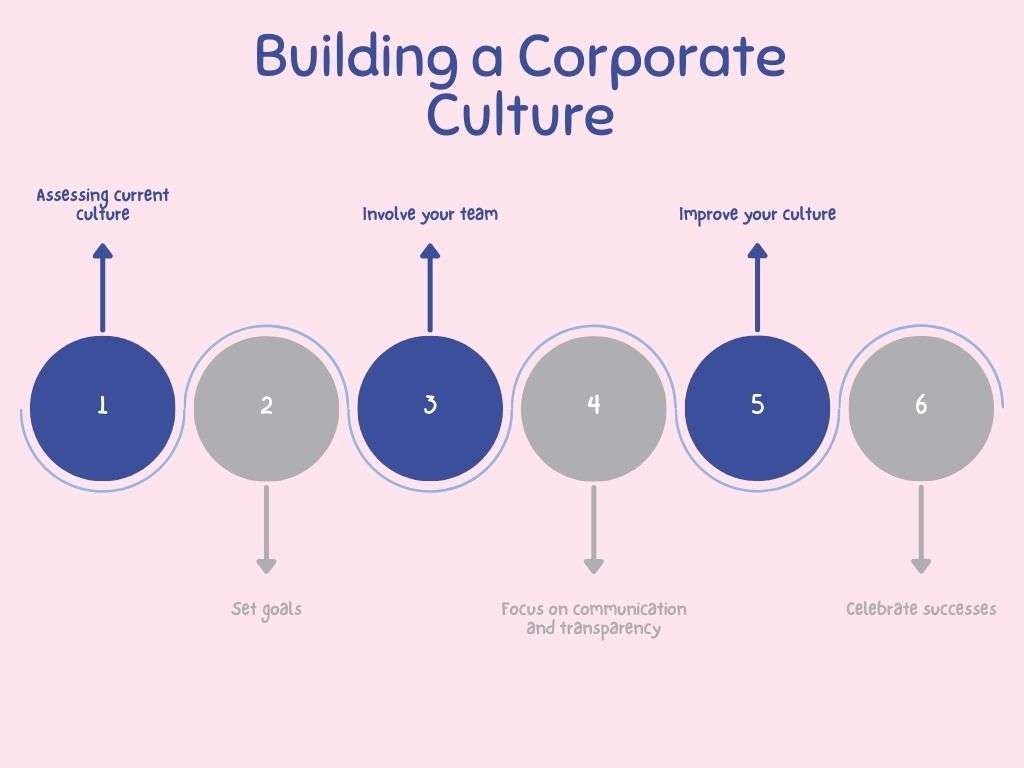
Building a Healthy Organizational Corporate Culture: 6-Step Guide
Step 1: Assess your current culture
In the journey to building a healthy organizational corporate culture, the first crucial step is self-assessment. Understanding where you currently stand is key to progress. Just as a ship’s captain needs a map to navigate uncharted waters, an organization requires self-awareness to steer towards a healthier culture. This initial step is a cornerstone of our strategy, serving as the guiding compass for the rest of the transformation journey.
- Gather Stakeholder Insights: Begin by collecting feedback from all levels of your organization. Every voice matters, from leadership to entry-level employees. Use surveys, interviews, and focus groups to get a comprehensive view.
- Analyze Mission and Values: Compare your organization’s stated mission and values with the actual behaviors and decisions being made. Are they aligned, or is there a disconnect?
- Examine Behaviors and Practices: Scrutinize daily routines, interactions, and norms within your workplace. What behaviors are encouraged and rewarded? What habits may hinder progress?
- Review Leadership Styles: Assess the leadership styles within your organization. Are leaders embodying the desired cultural traits, or are there inconsistencies?
- Seek External Perspective: Consider hiring an external consultant to provide an impartial view of your culture, highlighting blind spots that may be overlooked internally.

Encourage Reflection
As you embark on this self-assessment journey, it’s essential to encourage your team to identify both strengths and weaknesses in your organization’s culture. Remember, our goal is not just to pinpoint problems, but also to recognize what’s working well. By fostering a culture of open reflection and honest evaluation, we create a foundation for a healthier corporate culture. Through this process, we can identify areas in need of transformation and celebrate the aspects that already shine, all in the spirit of nurturing a culture of growth and success.
Step 2: Set cultural goals!
In the transformative journey of shaping a healthier corporate culture, the next waypoint is setting clear cultural goals. Think of these goals as your North Star, guiding your organization towards the desired culture that aligns with your mission and values. Just as a roadmap helps you reach your destination, defining cultural goals provides a clear direction for your cultural transformation. But it’s not just about setting goals; it’s about ensuring they align with your company’s values and mission. Here’s how you can do it:
- Start with Core Values: Examine your organization’s core values and mission statement. Ensure that your cultural goals align with these foundational principles.
- Involve Stakeholders: Engage employees and leadership in the process of setting cultural goals. Encourage them to provide input and insights that connect with your company’s values and mission.
- Regular Evaluation: Continuously evaluate your progress towards these goals, ensuring that they remain aligned with your evolving values and mission.
Examples for positive cultural goals:
Step 3: Involve your team!
In the fascinating journey of cultivating a thriving corporate culture, one of the most powerful catalysts is involving your team in shaping that culture. This isn’t just a practical step; it’s a transformative one. Here’s why:
Engaging your workforce in cultural development requires a well-thought-out strategy. Consider these approaches:
- Open Dialogue and Feedback: Create channels for open dialogue and regular feedback. Encourage employees to share their ideas, concerns, and suggestions for cultural improvement.
- Employee-Led Initiatives: Empower employees to initiate and lead cultural projects. This gives them a sense of ownership and the opportunity to champion cultural change.
- Training and Education: Provide resources and training to help employees better understand the desired culture and their role in shaping it.
- Recognition and Rewards: Recognize and reward employees who exemplify the desired cultural behaviors. This reinforces the importance of the culture you aim to build.
Example
Tech Innovators Inc. is a cutting-edge technology company that faced the challenge of nurturing a more innovative and dynamic corporate culture. In their journey, they took an approach that involved their employees to drive cultural change. They introduced what they called “Innovation Huddles,” which were regular meetings where all employees, regardless of their role, were encouraged to share their ideas, no matter how unconventional. These sessions became a melting pot of creativity, where innovative concepts flowed freely.
As a result of involving their team in this manner, Tech Innovators Inc. experienced a profound transformation. They shifted from a traditionally rigid and hierarchical structure to a hub of creativity and flexibility. This shift in culture led to an impressive surge in innovative solutions, with employees feeling not just engaged, but genuinely empowered to shape the company’s future.
Step 4: Focus on communication and transparency in the process
In the dynamic realm of transforming corporate culture, open communication stands as an essential pillar in nurturing a healthier and more vibrant environment. It’s the foundation on which trust, collaboration, and understanding are built, making it a linchpin of cultural change. Here’s why:
To foster a culture of transparency and open communication, consider these practical tips:
- Lead by Example: Leadership should be the embodiment of open communication. When leaders openly share information, it sets a precedent for the entire organization.
- Regular Updates: Implement regular updates, such as weekly or monthly newsletters, town hall meetings, or digital communication platforms, to keep employees informed about key developments and organizational news.
- Feedback Mechanisms: Create avenues for employees to provide feedback, whether through surveys, suggestion boxes, or open-door policies. Show that their input is valued.
- Conflict Resolution: Develop a clear process for addressing conflicts and grievances. A fair and transparent approach to conflict resolution is fundamental to building trust.
Step 5: Continue to improve your culture
In the journey of shaping a healthier organizational corporate culture, the work doesn’t end with the initial changes. Just as a garden needs ongoing care and attention to flourish, your culture requires continuous assessment and adaptation. Here’s why:
To ensure you’re on the right track, consider these key performance indicators to monitor cultural progress:
- Employee Satisfaction and Engagement Surveys: Regular surveys can provide insights into employee happiness and engagement, which are strong indicators of cultural health.
- Employee Turnover Rates: A reduction in turnover rates is a positive sign that your culture is becoming more attractive to your workforce.
- Productivity and Performance Metrics: An increase in productivity and improved performance can be a direct result of a healthier culture.
- Innovation and Collaboration Metrics: Track the number of innovative ideas and collaborative efforts to measure the impact of culture on creativity and teamwork.
Step 6: Celebrate successes!
In the vibrant tapestry of cultivating a healthy organizational corporate culture, acknowledging and celebrating cultural wins is a powerful yet often overlooked aspect. It’s akin to fuel for the engine of transformation, propelling it forward. Here’s why these celebrations are paramount:
Example
InnovateTech Solutions embarked on a cultural transformation journey, emphasizing innovation and collaboration. They introduced “Innovation Days,” where employees had the freedom to work on their creative projects. The impact was profound, with a surge in innovative solutions and a 30% increase in overall productivity. Celebrations were a cornerstone of their journey, and they attributed their success to a culture that acknowledged and celebrated every step toward their vision.


The future of Organizational Corporate Culture
Corporate culture is an ever-evolving entity, continuously shaped by external factors and internal dynamics. As we look ahead, it’s essential to stay attuned to the emerging trends in the world of corporate culture.
- Remote and Hybrid Work Environments: The pandemic has redefined how and where we work. As remote and hybrid work environments become increasingly common, corporate cultures must adapt to foster connectivity and engagement in a distributed workforce.
- Diversity, Equity, and Inclusion (DEI): The focus on DEI continues to grow. Organizations are expected to embrace diversity, ensure equity, and promote inclusivity as core components of their culture.
- Wellness and Work-Life Balance: The well-being of employees is taking center stage. Companies that prioritize employee wellness and work-life balance are likely to attract and retain top talent.
Conclusion: The ever-evolving journey of corporate culture
In conclusion, corporate culture is not a static concept but an ever-evolving journey. To build and maintain a healthy organizational corporate culture, companies must be cognizant of their values, behaviors, and symbols, while also adapting to upcoming trends and fostering adaptability. It’s a journey where the destination is a culture that nurtures employees, enhances performance, and propels the organization towards enduring success. As you embark on this voyage, remember that the journey itself is as valuable as the destination, and it’s the commitment to nurturing and evolving your culture that truly sets your organization apart.
Aditional Resources:
Here’s a list of reputable sources and additional reading material that can provide in-depth insights into organizational corporate culture:
1. Books:
- “The Culture Code: The Secrets of Highly Successful Groups” by Daniel Coyle: This book explores the role of culture in building successful teams and organizations, backed by research and real-world examples.
- “Corporate Culture and Performance” by John P. Kotter and James L. Heskett: This book delves into the connection between corporate culture and business performance, with a focus on understanding and managing culture to achieve better results.
- “Reinventing Organizations: A Guide to Creating Organizations Inspired by the Next Stage of Human Consciousness” by Frederic Laloux: Laloux discusses the evolution of organizational culture and introduces the concept of “Teal organizations,” which promote a more holistic, purpose-driven, and self-managed approach to work.
2. Articles:
- “The Impact of Corporate Culture on Business Performance” (Harvard Business Review): This article discusses the relationship between corporate culture and business performance, highlighting how culture can be a competitive advantage.
- “The Culture Factor” (Strategy+Business): This in-depth article explores the role of culture in business and offers insights into assessing and changing culture to achieve strategic goals.
3. Podcasts:
- “WorkLife with Adam Grant” (Podcast): Organizational psychologist Adam Grant hosts this podcast, where he explores various aspects of work and culture. Episodes like “How to Make Your Team More Resilient” and “The Power of Positive Leadership” touch on corporate culture.
- “HBR IdeaCast” (Harvard Business Review): This podcast covers a wide range of business and management topics, including corporate culture. Episodes such as “The Hidden Influences in Corporate Culture” provide valuable insights.

