
Exit Interview Survey: Free Template with AI Turnover Analysis
12 questions that uncover the real reasons people leave. 8 structured ratings on management, growth, recognition, compensation, and culture, plus 4 open-text questions for honest qualitative feedback. AI analyzes patterns across all departures to prevent future turnover.
Use This Template FreeDepartures of high-performing employees the organization wanted to retain. The most costly type of turnover. Exit surveys help identify the root causes that drive your best people away.
Former employees who return to the organization. 35% of all new hires in 2025 were returning employees (ADP). A respectful exit process with honest feedback increases the chance of rehiring top talent later.
Total cost to replace a departed employee including recruiting, onboarding, training, and lost productivity. Typically 50-200% of annual salary depending on seniority. U.S. businesses lose approximately $1 trillion per year to voluntary turnover.

I've analyzed the results and summarized the key themes — with actionable recommendations for your team.
What Is an Exit Interview Survey?
An exit interview survey, also called exit survey, offboarding survey, or employee departure questionnaire, collects structured feedback from employees who are leaving the organization. Unlike informal exit conversations, anonymous surveys yield 2-3x more honest feedback because departing employees feel safe sharing the real reasons they are leaving.
According to SHRM, only 25% of organizations systematically analyze exit data, meaning most companies lose employees without understanding why. Replacing an employee costs 50-200% of their annual salary (SHRM), yet the insights to prevent the next departure are sitting in unanalyzed exit feedback. Our template uses 8 LIKERT questions covering key retention factors plus 4 open-text questions. AI analyzes themes across all departures over time, so you see systemic patterns, not just individual stories.
Start using this template for freeWhy Use Exit Interview Surveys?

Prevent Future Turnover
Identify systemic issues driving departures before they affect more employees. Every exit contains retention insights for the people who are still there. Without systematic analysis, the same problems cause departure after departure.
Replacing an employee costs 50-200% of annual salary (SHRM). Organizations acting on exit data reduce first-year turnover by 34%.

AI Pattern Detection Across Departures
AI analyzes themes across multiple exit surveys over time, revealing root causes that individual conversations miss. It groups open-text responses into categories like management issues, growth barriers, compensation gaps, or culture problems.
Third-party exit surveys reveal different reasons for leaving 40-63% of the time compared to internal conversations.

Anonymous for Real Honesty
Departing employees are significantly more honest in anonymous surveys than in face-to-face exit interviews with HR or their manager. The real reasons for leaving often stay hidden in traditional conversations.
Anonymous exit surveys get 2-3x more candid and actionable responses than face-to-face interviews.
Exit Interview Questions: All 12 to Ask Departing Employees
12 anonymous questions: 8 LIKERT-scale ratings covering key retention factors (management, growth, recognition, compensation, role clarity, workload, culture, boomerang intent), plus 4 open-text questions for honest qualitative feedback about departure reasons and improvement suggestions.
Work Experience & Culture
My role and responsibilities matched what was communicated when I joined.
Role-reality mismatch is a preventable departure reason. Low scores signal hiring process improvements needed. This is fixable without changing culture or compensation.
I received adequate recognition for my work.
Lack of recognition is among the top 3 reasons employees leave (SHRM). It is also the most cost-effective retention lever because recognition costs almost nothing but has outsized impact.
My manager supported my growth and development.
Manager quality is the #2 departure reason. 50% of resignations are attributed to the direct manager relationship. Low scores here validate investing in leadership development.
I had sufficient opportunities for career advancement.
Lack of growth is the #1 reason employees leave across industries. In Germany, 48% cite Karrierechancen as a key quit reason. Low scores demand visible career pathway creation.
My compensation and benefits were fair for my role.
Compensation is consistently in the top 3 departure reasons but is not always the primary driver. If other scores are high but compensation is low, a targeted pay adjustment may have prevented the departure.
My workload was manageable and sustainable.
Workload sustainability predicts burnout-driven departures. Low scores here combined with high scores on other factors suggest the person liked the job but could not sustain the pace.
The workplace culture and environment were positive.
Toxic culture is the #1 departure reason in recent research (32.4%). A low score here is the strongest signal that broader culture work is needed, not just individual fixes.
I would consider returning to this organization in the future.
Boomerang intent predicts employer brand health and future rehire potential. 35% of new hires in 2025 were returning employees (ADP). A respectful exit process increases this rate significantly.
Departure Reasons & Future
What was the primary reason for your departure?
The most critical exit interview question. Open text captures the specific trigger that tipped the decision, which LIKERT scales cannot. AI groups these triggers into themes across all departures.
What could the organization have done differently to keep you?
This question surfaces the specific intervention that would have prevented the departure. Answers often reveal surprisingly simple fixes (flexible hours, role change, manager swap) that were never discussed.
What advice would you give to improve this workplace?
Departing employees have unique perspective: freed from career consequences, they give the most honest improvement advice. AI detects recurring themes that should become priorities.
Is there anything else you would like to share about your experience?
The catch-all question captures insights that the structured questions miss. Departing employees often share their most important feedback here because it feels less directed and more personal.
How to Use Exit Interview Survey Results
Send 1-2 Weeks Before Last Day
Send the exit survey 1-2 weeks before the last working day, when the employee has mentally transitioned. Best practice: send it after the Arbeitszeugnis (work reference) has been issued so the employee speaks freely.
Review Retention Factor Scores
Low scores in recognition, growth, compensation, or management reveal systemic retention risks. AI ranks the 8 LIKERT dimensions by urgency across all departures, showing which factor is driving the most exits.
Read AI Theme Analysis
AI groups open-text responses across all departures into themes: management issues, growth barriers, compensation gaps, culture problems, or workload concerns. Over time, patterns emerge that individual conversations never reveal.
Take Preventive Action
Address the top 2-3 exit themes to prevent the same reasons from causing more departures. Share aggregated insights (not individual responses) with leadership. Track whether your retention initiatives actually reduce the themes over time.
Free templates, survey tools & results
Your free access to templates, survey tools, and results with ways to export anywhere.
Get Started Free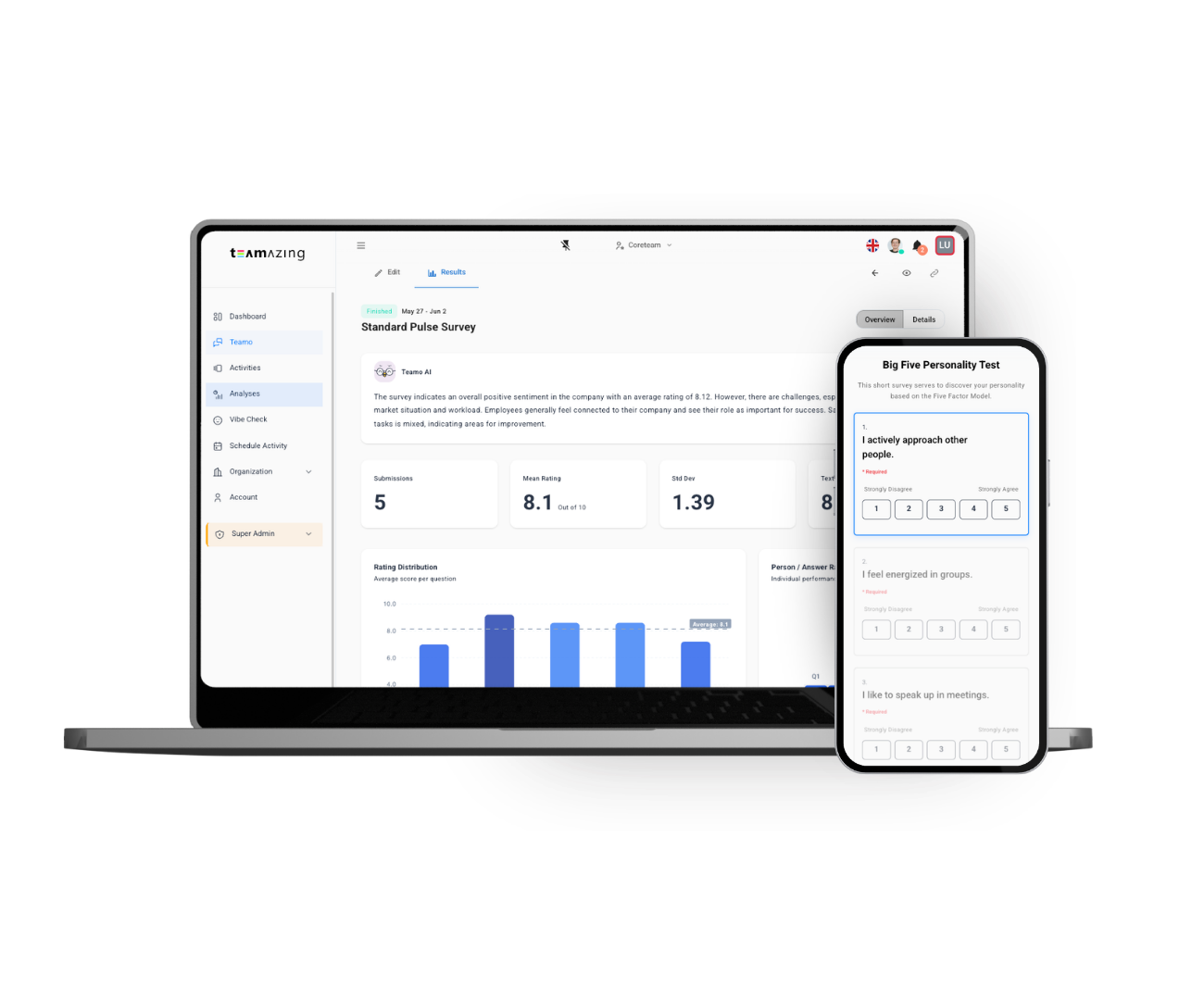
Teamo AI tracks exit themes over time and shows whether your retention initiatives are addressing the root causes departing employees identify. It compares departure patterns by department, tenure, and seniority to pinpoint where intervention is most urgent.
How It Works
Choose Template
Select the Exit Interview Survey template. Send to departing employees 1-2 weeks before their last working day, ideally after the work reference has been finalized.
Employee Completes Anonymously
12 anonymous questions, 15 minutes. 8 LIKERT ratings on retention factors plus 4 open-text questions for honest departure feedback. GDPR-compliant, no personal data stored.
Get AI Turnover Analysis
AI identifies departure themes, ranks retention risk factors, and recommends specific strategies to reduce future turnover. Insights improve with every additional exit survey.
Exit Interview Survey: Frequently Asked Questions
Explore more Templates
Find the right survey template for your team


Ready to get started?
Create your Exit Interview Survey in minutes — free with AI-powered analysis.
Use This Template Free