
Onboarding Survey: Free New Hire Template with AI Analysis
10 questions measuring orientation quality, role clarity, training effectiveness, manager support, team integration, and overall onboarding satisfaction. Send at 30, 60, or 90 days. AI detects the onboarding gaps that cause early turnover before your new hires decide to leave.
Use This Template FreeCompliance (paperwork, policies), Clarification (role, expectations), Culture (values, norms), Connection (relationships, team), and Check-back (follow-up, feedback). Effective onboarding covers all five. Most companies only do Compliance.
Employees leaving within the first 12 months. 30% leave within 90 days. 86% decide how long they will stay within the first 6 months (Enboarder). Each early departure costs 50-200% of the annual salary to replace.
The time until a new hire reaches full performance. Without structured onboarding: 8-12 months. With structured onboarding: 4-6 months. Onboarding surveys track whether new hires feel they are getting up to speed or struggling silently.

I've analyzed the results and summarized the key themes — with actionable recommendations for your team.
What Is an Onboarding Survey?
An onboarding survey, also called new hire survey, onboarding feedback questionnaire, or employee orientation survey, collects structured feedback from new employees about their integration experience. It measures whether your onboarding process actually delivers on the 5 C's: Compliance, Clarification, Culture, Connection, and Check-back.
Strong onboarding improves new hire retention by 82% (Brandon Hall Group). Yet only 12% of employees say their company does onboarding well (Gallup), and 30% of new hires leave within the first 90 days. The gap between what HR intends and what new employees experience is where onboarding surveys add value. Our template uses 10 questions covering all key onboarding dimensions. Send it at 30, 60, or 90 days, and AI detects patterns across all new hires to show where your onboarding process works and where it creates early turnover risk.
Start using this template for freeWhy Run Onboarding Surveys?

Catch Problems Before They Cause Turnover
New hires rarely voice onboarding problems to their manager. They smile, nod, and quietly update their resume. Structured surveys catch confusion, isolation, and unmet expectations while there is still time to fix them.
Strong onboarding improves retention by 82% (Brandon Hall). 30% of new hires leave within 90 days without it.

AI Detects Onboarding Gaps Across All New Hires
AI analyzes feedback from all new hires over time, revealing systemic onboarding gaps. If training consistently scores low but team integration scores high, the problem is the training program, not the teams.
Only 12% of employees say their company does onboarding well (Gallup). AI shows you exactly what to fix.

Quick, Phased & GDPR-Compliant
10 questions in 7 minutes. Send at 30, 60, or 90 days to capture the onboarding journey at different phases. Anonymous or named, depending on your follow-up needs. GDPR-compliant.
86% of new hires decide how long they will stay within the first 6 months (Enboarder). Phased surveys catch drift early.
Onboarding Survey Questions: All 10 for New Hires
10 LIKERT-scale questions covering the full onboarding experience: orientation quality, role clarity, training effectiveness, manager support, team integration, resource availability, cultural fit, workload appropriateness, expectations alignment, and overall satisfaction. Send at 30, 60, or 90 days.
Orientation & Clarity
The onboarding process gave me a clear understanding of my role and responsibilities.
Role clarity in the first weeks is the strongest predictor of new hire satisfaction. 62% of new hires report insufficient clarity about their actual responsibilities (BambooHR).
I received sufficient training to perform my job effectively.
Training adequacy directly impacts time-to-productivity. Structured onboarding cuts ramp-up time from 8-12 months to 4-6 months. Low scores here are the most fixable onboarding gap.
I had access to the tools, systems, and resources I needed from the start.
43% of new hires wait over a week for their workstation and tools (StrongDM). Missing tools create immediate frustration and signal low organizational readiness.
The information I received before my first day prepared me well.
Preboarding quality predicts first-day experience. 93% of employees with early preboarding described their experience as excellent (Enboarder). 36% of German employers experience resignations before the first day (Haufe).
Support & Integration
My manager has been supportive during my onboarding.
Manager involvement is the single most impactful onboarding factor. Employee experience is 3.5x better with supportive management during onboarding. Low scores signal that managers need onboarding-specific coaching.
I feel welcomed and integrated into my team.
Team integration is the 'Connection' C of onboarding. Social belonging in the first weeks predicts long-term engagement and retention. Low scores indicate missing buddy systems or team introduction rituals.
I understand the company culture and values.
Cultural understanding is the most often skipped onboarding dimension. Most companies focus on compliance and tools but neglect the cultural context new hires need to navigate successfully.
Satisfaction & Fit
My workload during the onboarding period has been appropriate.
Workload calibration during onboarding is tricky: too little feels disengaging, too much creates overwhelm. Either extreme predicts early departure. AI detects which direction your onboarding leans.
The role matches what was described during the hiring process.
Expectation mismatch is the #1 preventable cause of early turnover. 56% of German employers cite false expectations as the cause of early departures (Haufe). Low scores here demand hiring process alignment, not onboarding fixes.
Overall, I am satisfied with my onboarding experience.
The overall satisfaction anchor validates whether individual dimension improvements actually make the onboarding experience better. This score is also your onboarding NPS proxy and predicts 90-day retention.
How to Use Onboarding Survey Results
Send at 30, 60, and 90 Days
The 30-60-90 day phased approach captures the full onboarding journey. Day 30 catches early friction. Day 60 reveals integration gaps. Day 90 predicts whether the new hire will stay past the first year.
Identify Systemic Gaps
AI compares onboarding feedback across all new hires over time. If training scores are consistently low across departments, the problem is systemic. If only certain teams score low on integration, those teams need targeted support.
Fix the Highest-Impact Gaps First
Low tool/resource scores are quick wins (budget approval). Low manager support scores need coaching programs. Low expectation alignment scores need hiring process fixes. AI prioritizes by impact on retention.
Track Improvement Over Time
Compare onboarding scores quarter over quarter. AI shows whether your changes are actually improving the new hire experience or whether the same problems persist for each new cohort.
Free templates, survey tools & results
Your free access to templates, survey tools, and results with ways to export anywhere.
Get Started Free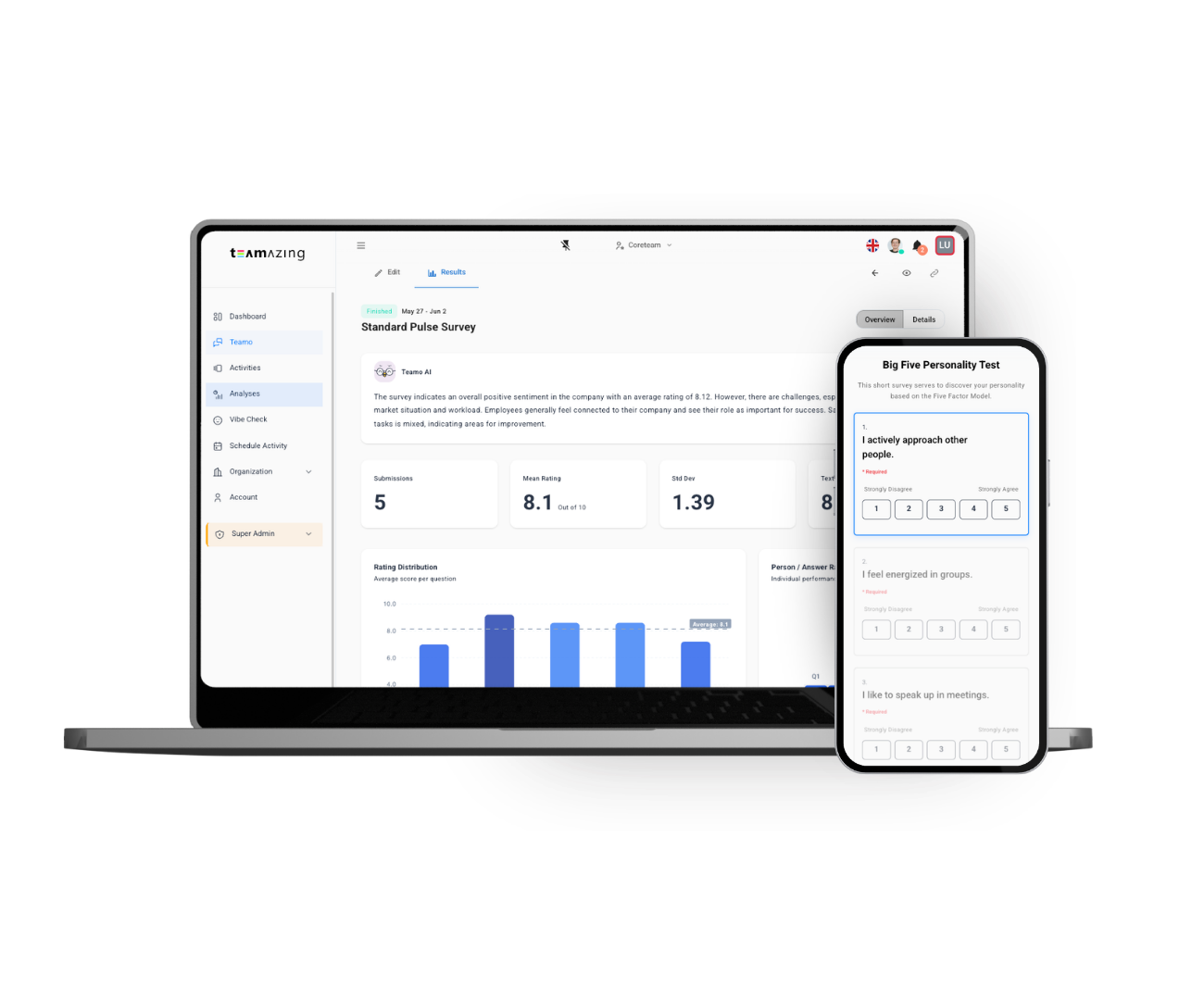
Teamo AI compares onboarding feedback across all new hires and cohorts, identifying which onboarding dimensions are consistently strong and which create early turnover risk. It tracks the impact of your onboarding improvements over time and flags when specific dimensions start declining.
How It Works
Choose Template & Timing
Select the Onboarding Survey template. Decide when to send: 30-day check-in, 60-day mid-point, or 90-day assessment (or all three for the complete picture).
New Hire Completes 7-Minute Survey
10 LIKERT-scale questions covering all key onboarding dimensions. Can be anonymous or named depending on whether you want individual follow-up. GDPR-compliant.
Get AI Onboarding Report
AI generates a report with dimension scores, cohort comparisons, trend tracking, and specific recommendations for improving your onboarding process.
Onboarding Survey: Frequently Asked Questions
Explore more Templates
Find the right survey template for your team


Ready to get started?
Create your Onboarding Survey in minutes — free with AI-powered analysis.
Use This Template Free