




DEI Survey: Free Diversity & Inclusion Template with AI Analysis

12 anonymous questions measuring diversity, equity, inclusion, belonging, authenticity, and psychological safety. 10 LIKERT ratings plus 2 open-text questions for qualitative insights. AI detects inclusion themes and patterns across teams, so you see where your culture is strong and where work is needed.

Use This Template Free
Preview
Inclusion78%

The degree to which diverse individuals feel welcomed, respected, supported, and valued as full team members. Inclusion is the active ingredient that makes diversity drive performance.

Equity+42

Fair treatment, access, and advancement opportunities for all employees, recognizing that different people may need different support to achieve equal outcomes. Not the same as equality (treating everyone identically).

Belonging84%

The feeling of being accepted and included as an authentic member of a group. Belonging is the emotional outcome of effective diversity and inclusion work, and the strongest predictor of retention in diverse teams.

Teamo AI assistant providing survey analysis insights

I've analyzed the results and summarized the key themes — with actionable recommendations for your team.

What Is a DEI Survey?

A DEI survey (Diversity, Equity & Inclusion), also called inclusion and belonging survey or diversity climate survey, measures how employees experience fairness, respect, and belonging in the workplace. It goes beyond demographic headcounts to capture lived experience: whether people feel included, treated equitably, and safe to be their authentic selves.

McKinsey research shows companies in the top quartile for ethnic and gender diversity are 36% more likely to outperform their peers financially. But diversity alone does not drive results. Diverse teams only outperform when inclusion is high. Our template uses 10 LIKERT questions across 8 DEI dimensions plus 2 open-text questions for qualitative depth. AI analyzes all responses and detects inclusion themes, surfacing specific patterns like belonging gaps, equity concerns, or microaggression reports that quantitative scores alone cannot reveal.

12Questions
10minDuration
1-500Participants
AITheme Analysis
Start using this template for free

Why Run a Diversity & Inclusion Survey?

Measure What Actually Drives Performance

Measure What Actually Drives Performance

Diversity headcounts alone miss the point. Inclusion and belonging are what drive performance, innovation, and retention. A DEI survey measures perceived experience, not just demographics.

Companies in the top quartile for diversity are 36% more likely to outperform peers financially (McKinsey 2023).

AI Theme Detection in Open-Text Responses

AI Theme Detection in Open-Text Responses

AI analyzes the 2 open-text questions to detect specific inclusion themes across teams: belonging gaps, equity barriers, microaggression patterns, or positive practices. Issues invisible in quantitative scores alone become visible.

Open-text theme analysis reveals inclusion issues invisible in LIKERT scores alone. 76% of employees say diversity matters when choosing jobs (Glassdoor).

Anonymous, Safe & GDPR-Compliant

Anonymous, Safe & GDPR-Compliant

DEI topics require maximum psychological safety. Full anonymization ensures honest, vulnerable feedback about experiences that employees would never share in meetings or 1-on-1s. No demographic data is collected that could identify individuals.

Anonymity increases DEI survey honesty by 60% compared to attributed surveys.

DEI Survey Questions: All 12 Questions

12 anonymous questions: 10 LIKERT-scale ratings across 8 diversity, equity, and inclusion dimensions, plus 2 open-text questions for qualitative insights that AI analyzes for theme detection.

Diversity, Equity & Inclusion

1

My company values diversity and different perspectives.

Perceived value of diversity signals whether DEI is genuinely embedded in the culture or merely performative. The gap between policy and experience is the core insight.

LIKERT
2

All employees have equal access to career advancement opportunities.

Equity in advancement is where DEI meets business reality. Low scores here indicate structural barriers that demographic data alone cannot reveal.

LIKERT
3

People from different backgrounds are treated with equal respect.

Respect across difference is the behavioral foundation of inclusion. If this scores low while the diversity value question scores high, the gap signals performative DEI.

LIKERT
4

Our leadership team actively champions diversity and inclusion.

Leadership commitment is the #1 predictor of successful DEI initiatives. Without visible leadership support, inclusion efforts are perceived as HR projects rather than organizational priorities.

LIKERT
5

I see people like me represented in leadership positions.

Representation in leadership drives aspiration and retention. Low scores signal a glass ceiling effect that may not show in overall diversity metrics.

LIKERT

Belonging & Safety

1

I feel like I belong in my team.

Belonging is the emotional core of inclusion. Teams with high belonging scores outperform on every engagement metric. This is also a key indicator for the Charta der Vielfalt commitment.

LIKERT
2

I can be my authentic self at work.

Authenticity is the deepest measure of inclusion. If employees feel they must hide parts of their identity to fit in, the culture is diverse but not inclusive.

LIKERT
3

I feel safe to speak up about concerns without fear of negative consequences.

Psychological safety is the precondition for inclusion to work. Without it, diverse perspectives stay silent, and the innovation benefit of diversity is lost.

LIKERT
4

If I witnessed discrimination or bias, I would know how to report it.

Reporting awareness is a compliance and culture metric. Low scores indicate that anti-discrimination policies exist on paper but are not effectively communicated. Relevant for AGG compliance in Germany.

LIKERT
5

I believe our organization takes meaningful action on diversity and inclusion.

Action perception separates genuine DEI commitment from performative statements. If other inclusion scores are high but action perception is low, employees see nice words without follow-through.

LIKERT

Open Feedback

1

What does our organization do well regarding diversity and inclusion?

Positive open-text questions surface strengths that quantitative scores miss. AI detects recurring positive themes that can be amplified and shared across teams.

TEXT
2

What improvements would you suggest for a more inclusive workplace?

Open-ended improvement questions surface specific, actionable DEI initiatives directly from employees. AI groups suggestions into themes like representation, processes, communication, or training needs.

TEXT

How to Use DEI Survey Results

1

Collect Anonymous Responses

Run annually or bi-annually. Ensure maximum participation through leadership endorsement and clear communication about anonymity and purpose. Share results and actions from the previous survey to build trust.

2

Analyze LIKERT Scores by Dimension

Compare scores across the 8 DEI dimensions. Equity and belonging often score lower than diversity awareness: this is normal and highly actionable. AI highlights the gaps between dimensions.

3

Read AI Theme Report

AI analyzes the open-text responses and groups them into themes: representation gaps, advancement barriers, microaggression patterns, belonging experiences, or positive practices. These qualitative insights explain the why behind quantitative scores.

4

Create a Focused Action Plan

Focus on 2-3 lowest-scoring dimensions. Share results transparently with all employees and involve them in solution design. Track progress with the next survey cycle.

Free templates, survey tools & results

Your free access to templates, survey tools, and results with ways to export anywhere.

Get Started Free
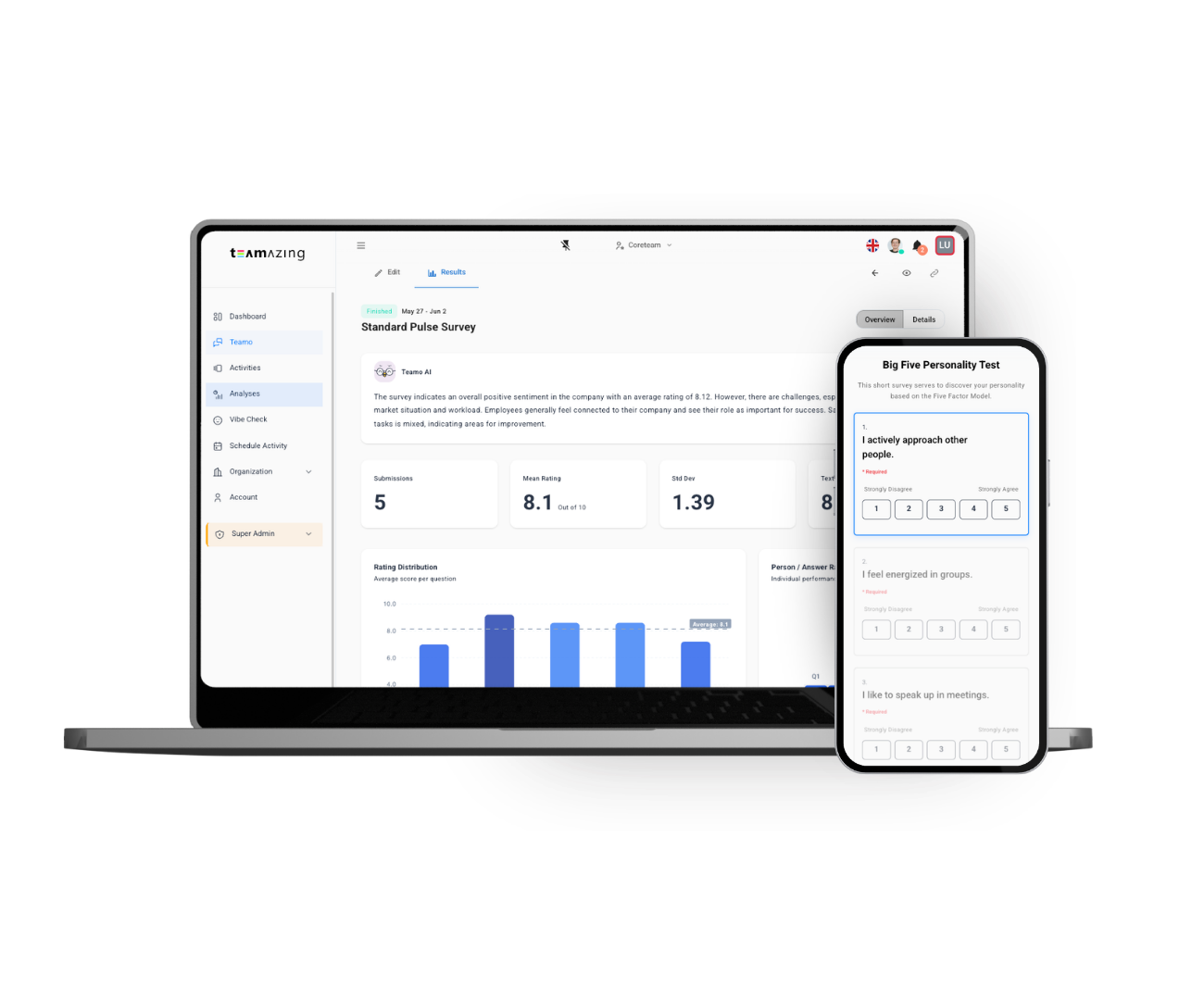
Teamo analysis platform showing survey results on laptop and mobile
Teamo AI assistant explaining analysis results

Teamo AI detects sentiment patterns in open-text DEI responses, grouping feedback into actionable themes like representation, advancement barriers, microaggressions, and belonging experiences. It also flags statistically significant differences between teams and departments.

How It Works

1

Choose DEI Template

Select the Diversity & Inclusion Survey template. Customize questions if needed for your organizational context.

2

10-Minute Anonymous Survey

12 anonymous questions: 10 LIKERT plus 2 open-text. Full anonymity guaranteed. GDPR-compliant, no special category data collected under Article 9.

3

Get AI DEI Report

AI analyzes quantitative dimension scores and open-text themes to create an actionable DEI report with team comparisons and specific improvement recommendations.

DEI Survey: Frequently Asked Questions

Ready to get started?

Create your Diversity, Equity & Inclusion Survey in minutes — free with AI-powered analysis.

Use This Template Free